
Categories
Guided Tours Our Tours

Norway and the Arctic Circle Tour

Embark on an unforgettable 22-day motorcycle adventure to the edge of the Arctic Circle. Ride through stunning fjords, towering waterfalls, and ancient glaciers as you journey into the land of the midnight sun. This is the ultimate motorbike tour for riders seeking breathtaking scenery and true adventure.

22-Day Motorcycle Tour of Norway


Tour at a Glance

📍 Duration:
22 days / 20 riding days

🏍️ Total Distance:
3,795 miles (6,100 km)

🗺️ Countries:
Holland, Germany, Denmark, Norway

🏔️ Highlights:
Arctic Circle, Geirangerfjord, Atlantic Road, Trollstigen, Låtefossen Waterfall

🛣️ Iconic Roads:
FV17 Kystriksveien (Coastal Highway), Atlantic Road, E6 “Roof of the World”

🏛️ UNESCO Sites:
Geirangerfjord, Winter Olympics Site (Lillehammer)

💰 From:
£4,995 per person

📅 Next Tour:
12 August – 02 September 2026

👨‍🏫 Guide:
Paul Winsor


Book Your Place


Why Choose Our Guided Motorcycle Tour Norway?

Our guided motorcycle tour Norway stands out as the premier Arctic Circle adventure for all riders. With carefully curated routes including the Atlantic Road and Trollstigen, and small group sizes ensuring personalized attention, this isn’t just another tour—it’s the ultimate Norwegian riding experience. You’ll benefit from years of route expertise, premium motorcycle-friendly accommodation, and the camaraderie of fellow adventure riders who share your passion for epic journeys.

Embark on our guided motorcycle tour Norway to the Arctic Circle – the ultimate 22-day adventure of a lifetime! This epic journey takes you through some of the world’s most spectacular landscapes, riding along winding coastal roads where steep-sided fjords, dramatic waterfalls, and ancient glaciers reveal the raw beauty of the North.

**Tour Dates **

**12/08/2026 – 02/09/2026**

**Tour Guide :- Paul Winsor**

Sat Nav Set Up

Testimonials


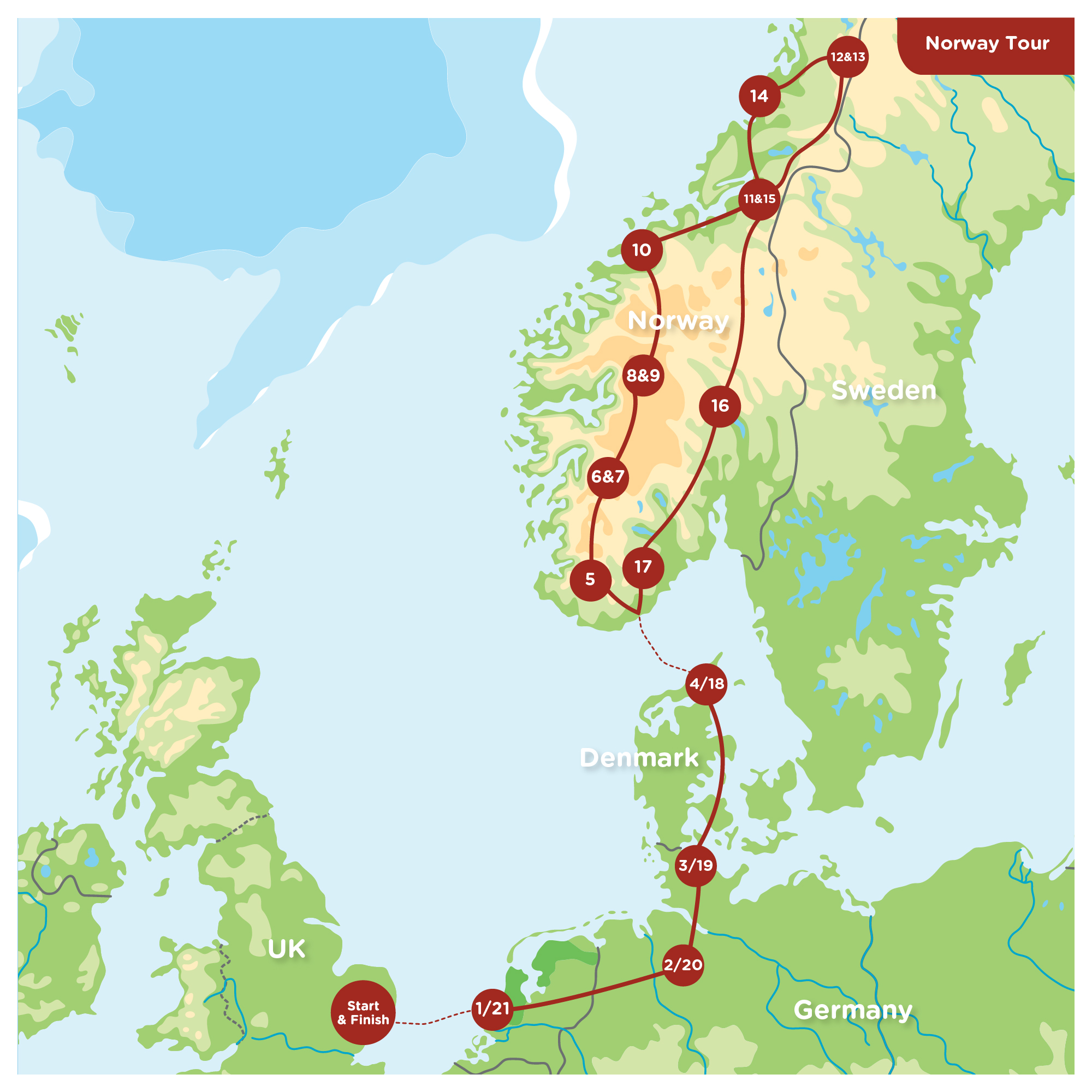
We muster for this epic tour at Harwich for the overnight ferry to Holland, once we disembark it’s across Holland and then on into Germany for our first night on dry land in the Lower Saxony region. We continue our journey into the very northern tip of Germany, crossing into Denmark the first Scandinavian country on our trip where we take the ferry across to Norway.

UNESCO Geirangerfjord Norway guided motorcycle tour scenic fjord cliffs waterfalls Seven Sisters mountain peaks
```
UNESCO-listed Geirangerfjord

We head east for our first night’s stay in Norway, which is followed by our first two night stay close to the Hardangervidda National Park stopping at the Låtefossen Waterfall en route. Choice of ride outs on day 7 either around the Hallingskarvet National Park or if you like train journeys there’s the option to visit Flams for what some describe as the most beautiful train ride in the world.

Our next two-night stop is the village of Geiranger at the end of the UNESCO-listed Geirangerfjord. Surrounded by 800-metre-high cliffs, breathtaking mountain peaks and cascading waterfalls, the impressive fjord really is a sight to behold. Ride out or rest day with the option to ride the Eagles Road or just relax and have a day off the bikes and explore Geiranger.

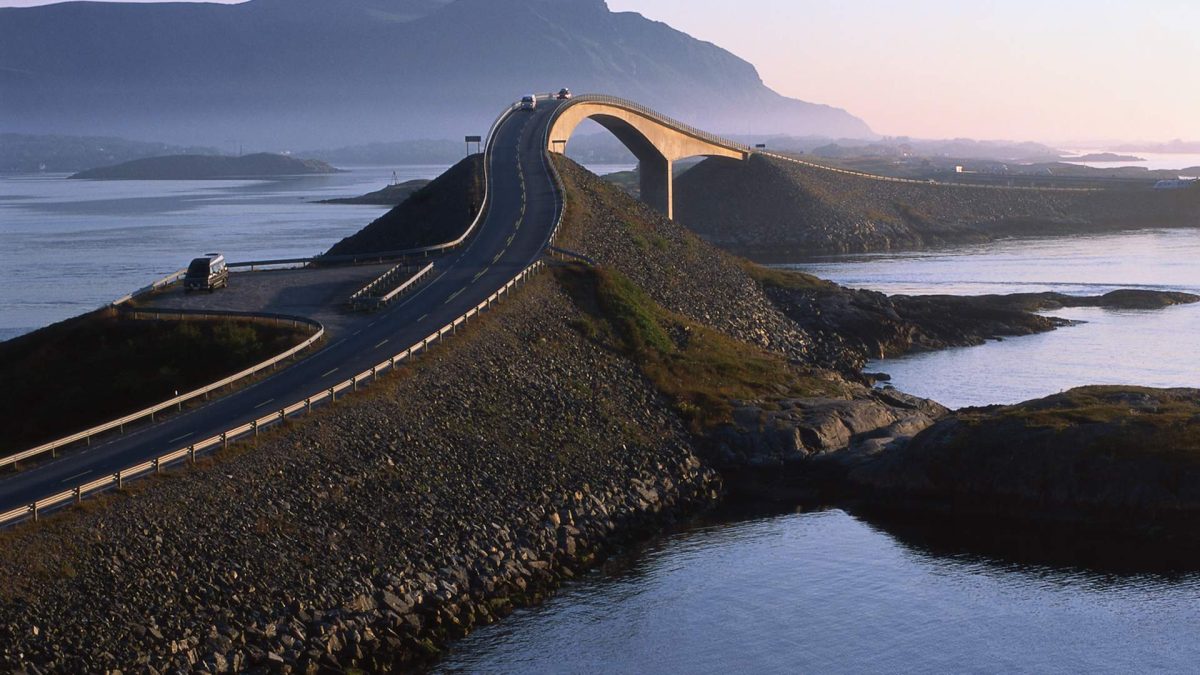
Heading further north via the Trolls Ladder and out towards the dramatic Atlantic coastline we end our next day by riding the Atlantic Road with its famous curved bridge, also used in the Bond Film “No Time to Die”.

Our next day’s ride takes us through Hell (the village, not the place the where the guy with the pointy tail lives) as we head north to the Arctic Circle, after an overnight near Trondheim we head to our most northerly stopover in Mo-I Rana the “Gateway to the Arctic” with another two-night stay in store. After our long journey north, we take a ride out to the Arctic Circle and find time to visit the northernmost motorcycle museum in Europe.
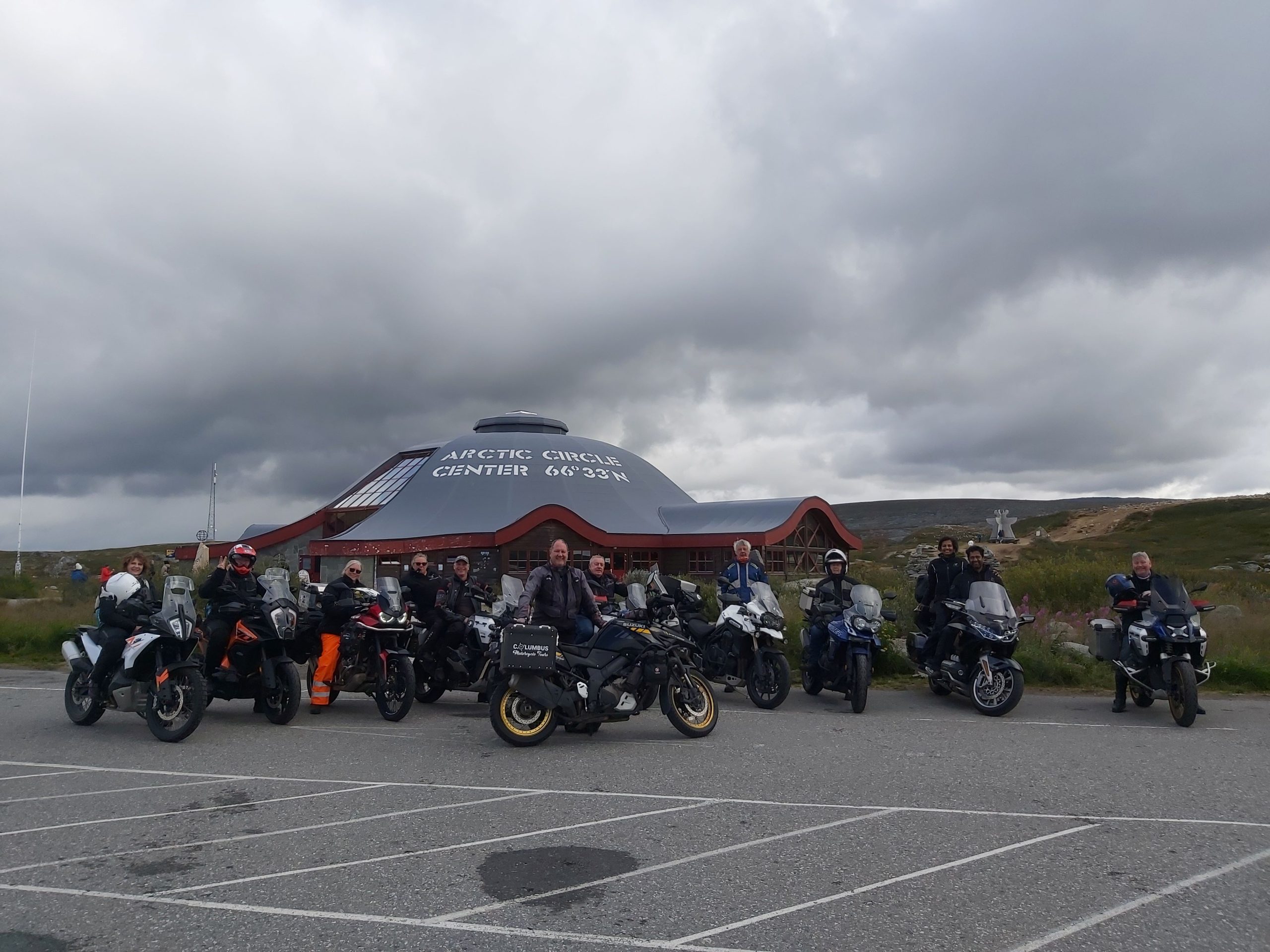
Motorcycles at Arctic Circle Centre Norway riders celebrating crossing Arctic Circle landmark achievement certificate Norwegian motorcycle tour
Arctic Circle Centre

Having ridden your motorcycle to the Arctic Circle we start heading south, we may have turned towards home but we still have many great roads to ride including the FV17 Kystriksveien Route or Costal Highway in English, which takes us on a winding route along the Atlantic coastline crossing between islands by ferry.

Our route then takes us across the centre of Norway past Forollhogna National Park and on to Lillehammer, where the 1994 Winter Olympics were held. For our last night in Norway, we head to the Telemark region famous for a particular style of cross-country skiing and of course the 1965 “Heros of Telemark” film starring Kirk Douglas and Richard Harris depicting the Norwegian resistance sabotage of the Vemork Norsk Hydro plant in the town of Rjukan.

We leave Norway and head back to Denmark via the ferry from Kristiansand, crossing back into Germany and back through Holland over the next couple of days to end this fantastic 22-day adventure with our overnight ferry back to Harwich.

Not many people can say they have ridden their motorcycle to the Arctic Circle and back, make sure you join us on this tour so you can be one of those that can!
Norway & Arctic Circle Motorcycle Tour – Frequently Asked Questions

What does it mean to ride to the Arctic Circle and will I get a certificate?

Crossing the Arctic Circle at 66°33′N latitude is a major motorcycling achievement! The Arctic Circle marks the line above which the sun doesn’t set during summer solstice (midnight sun) and doesn’t rise during winter solstice (polar night). On Day 13 of the tour, you’ll ride 50 miles north from Mo-i-Rana to the Arctic Circle Centre where you’ll cross this legendary line. Yes, you can purchase a certificate in the Arctic Circle Shop official Arctic Circle certificate proving you’ve crossed into the Arctic – a proud souvenir to display at home! You’ll also visit Europe’s northernmost motorcycle museum, take photos at the Arctic Circle monument, and experience the unique sensation of standing in the land of the midnight sun. Not many motorcyclists can say they’ve ridden to the Arctic Circle – you’ll be one of the elite few!

What makes the Atlantic Road (Atlanterhavsveien) so special?

The Atlantic Road is one of the world’s most spectacular motorcycle roads and a true engineering marvel! This stretch of road connects small islands across the open sea via a series of dramatic bridges, causeways, and viaducts. The most famous section is the Storseisundet Bridge – the curved “Bridge to Nowhere” that appears to launch drivers off into the ocean. This iconic bridge was featured in the James Bond film “No Time to Die” and has been called the world’s most beautiful drive. On stormy days, Atlantic waves crash over the road creating dramatic spray – though we ride in summer with calmer conditions! The road offers incredible ocean views, connects eight bridges, and provides an adrenaline-pumping sensation of riding across the open Atlantic. It’s unforgettable motorcycle riding!

What’s included in the 22-day Norway & Arctic Circle tour package?

This comprehensive package includes return ferry crossings (Harwich-Holland and Denmark-Norway), 21 nights quality accommodation (19 nights in hotels plus 2 nights onboard Harwich-Holland ferry), daily breakfast at all hotels, welcome and farewell group dinners, multiple Norwegian ferry crossings (extra cost), detailed route maps with GPS files, expert tour guide throughout, hotel parking fees, access to hotel leisure facilities, and comprehensive daily itineraries with recommended stops. You provide your own motorcycle, riding gear, fuel, lunches and most dinners, travel insurance including breakdown recovery, and personal expenses. All accommodation is carefully selected for quality, location, and spectacular views across Norway’s fjords and mountains.

What can I expect at the UNESCO-listed Geirangerfjord?

Geirangerfjord is one of Norway’s most spectacular natural wonders and a UNESCO World Heritage Site! This 15km-long fjord is surrounded by 800-meter-high (2,600 feet) vertical cliffs, snow-capped mountain peaks, and numerous cascading waterfalls including the famous Seven Sisters waterfall. Your two-night stay in the village of Geiranger allows time to fully experience this stunning location. On your rest day (Day 9), you can ride the Eagles Road (Ørnevegen) with its 11 dramatic hairpin bends climbing to the Ørnesvingen viewpoint for breathtaking fjord views from above, take a fjord sightseeing cruise, explore Geiranger village’s cafés and shops, or simply relax and absorb the incredible scenery. The combination of towering cliffs, waterfalls, and deep blue fjord water creates one of the world’s most photogenic landscapes!

Is 22 days too long for a motorcycle tour? How is it structured?

The 22-day duration is essential to reach the Arctic Circle and back while enjoying Norway’s spectacular scenery! The tour is carefully structured with excellent pacing: approximately 20 riding days averaging 175-200 miles, 2 full rest days with optional ride-outs (Hardangervidda/Flåm and Geiranger/Eagles Road), several two-night stays allowing unpacking and recovery, and a perfect balance of riding, sightseeing, and relaxation. The lengthy duration allows you to truly disconnect from daily life and immerse yourself in the Arctic adventure. Many riders report that after a few days they’re fully relaxed and don’t want the tour to end! The journey north takes time, but every mile is spectacular – from Dutch countryside through Danish farmland, across Norwegian fjords, along coastal highways, to the Arctic Circle and back. It’s a journey, not a race, allowing you to savor the experience fully.

What is the FV17 Kystriksveien (Coastal Highway) route?

The FV17 Kystriksveien (Norwegian Coastal Highway) is one of the world’s most beautiful motorcycle roads! This spectacular route runs along Norway’s dramatic Atlantic coastline, winding through countless islands, fjords, and coastal mountains. You’ll experience multiple ferry crossings between islands (ferries are an extra cost, but not expensive for motorcycles), ride alongside crystal-clear waters with mountain backdrops, pass through tiny fishing villages, and enjoy constantly changing coastal scenery. National Geographic designated this route one of the world’s most beautiful road trips. The road hugs the coastline, crosses bridges over narrow straits, and uses short ferry hops to connect islands – it’s island-hopping by motorcycle! Days 14-15 on the return journey from the Arctic Circle follow this stunning coastal route southbound. The combination of ocean views, mountain scenery, and Norwegian coastal culture makes this section unforgettable.

What weather should I expect in mid-August and what should I pack?

Mid-August (12 Aug – 02 Sept) can offers excellent riding conditions! Expect temperatures of 15-22°C (59-72°F) in southern Norway, 12-18°C (54-64°F) in the Arctic Circle region, and occasional rain (Norway is rainy, but August is one of the driest months). Pack for variable conditions: waterproof motorcycle gear (jacket, trousers, gloves), thermal layers for cold mornings/high altitudes, summer riding gear for warmer afternoons, warm evening clothes for hotels, waterproof luggage or liners. The weather can change quickly in mountains and coastal areas – layer your clothing for flexibility. Most days offer excellent riding weather, and Norway’s scenery is stunning in any weather! Rain is part of the Norwegian experience, creating those dramatic waterfalls and keeping the landscape lush and green.

Can I join the Norway & Arctic Circle tour as a solo rider?

Absolutely! Solo riders are very welcome and typically make up 50-60% of tour participants. This epic 22-day journey is perfect for solo riders seeking adventure and camaraderie. You can choose between sharing a twin room with another solo rider or upgrading to a private single room. The lengthy duration allows strong bonds to form among group members – many participants remain friends for years after. Our experienced guide ensures everyone feels part of the group while respecting individual riding pace and preferences. Solo riders appreciate the combination of independent riding during the day and shared meals/experiences in the evenings. The Arctic Circle achievement is even more meaningful when shared with a great group of riders!

More Questions About Norway & Arctic Circle Motorcycle Touring

  • Do I need special insurance? Yes, comprehensive European motorcycle insurance including breakdown recovery and repatriation is mandatory. Ensure coverage for Holland, Germany, Denmark, and Norway.
  • What currency does Norway use? Norwegian Krone (NOK) Denmark Danish Krone (DKK). Euros for Germany and Holland, . Cards widely accepted throughout, but carry some cash for small purchases.
  • Can pillions join? Absolutely! Pillions will love the spectacular fjord scenery, two rest days, UNESCO sites, and cultural experiences. Perfect for couples!
  • What about the Trollstigen? Trollstigen (Troll’s Ladder) features dramatic hairpin bends up a mountain face with waterfalls – spectacular riding and photo opportunities!
  • Will I see reindeer? Quite possibly! Reindeer are common in northern Norway, especially near the Arctic Circle. Ride carefully as they can cross roads unexpectedly.
  • Is the riding difficult? Moderate. Some long days (200-250 miles) but excellent roads, manageable pace, regular stops, and two full rest days. Average riding experience sufficient.
  • What about Norwegian tunnels? Norway has many long tunnels through mountains. They’re well-lit, well-maintained, and an interesting engineering experience. Some are quite long (several km)!
  • Can I see the Northern Lights? Unlikely in mid-August (wrong season). Northern Lights appear September-March when nights are dark.
  • What’s the Flåm Railway option? One of the world’s most beautiful train journeys, climbing 866m with 20 tunnels and dramatic mountain views. Optional activity on Day 7 rest day, we recommend booing in advance as it can be busy in the summer months.
  • Are roads crowded? Norway has light traffic compared to rest of Europe. Main tourist areas (Geiranger, Atlantic Road) are busier, but generally excellent riding conditions.
  • What about mobile phone coverage? Generally good in towns and along main roads; limited in remote mountain areas.
  • Is fuel readily available? Yes, though stations are more spread out in northern Norway. Planed fuel stops are included as part of each days itinerary – we typically have fuel stops every 100-125 miles.

Have more questions? Contact us – we’re happy to help plan your Arctic Circle adventure of a lifetime!